Author · Sacred Ideas · AI & Society · Incandescence
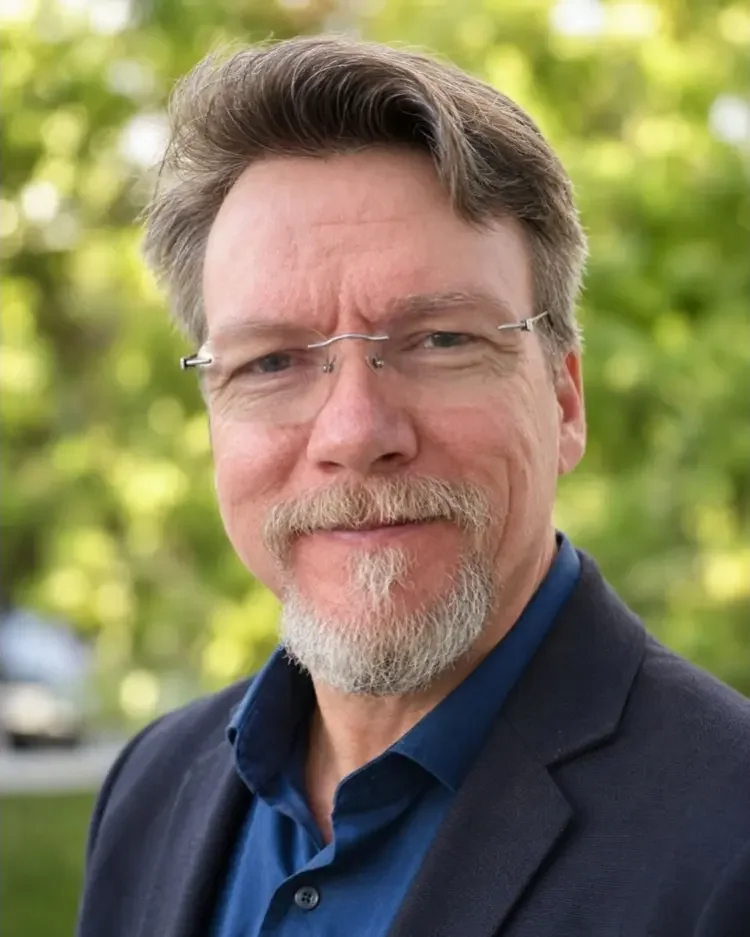
Rodney Ashfield
What if some of the most important questions about religion, consciousness and artificial intelligence are turning out to be questions about us?
Rodney Ashfield is a Canadian author writing about religion after certainty, consciousness, artificial intelligence, meaning and human judgement in a material universe. His work asks what human beings should preserve when inherited certainties weaken—and what we should be careful not to surrender as machine intelligence becomes increasingly capable.
Read the argument. Try a practice. Continue the conversation.
Religion gave people ways to grieve, gather, give thanks and pay attention. Sacred Ideas asks which of those practices remain worth carrying forward when certainty changes. You can begin with an essay, put a small practice to use in Within, or follow the writing as it develops.
Within’s Practice, Journal and Carrying are free. Its AI Inner Guide is optional.
Two inquiries, increasingly in conversation
What remains distinctly ours when intelligence is no longer ours alone?
Sacred Ideas asks what remains when supernatural certainty weakens but grief, wonder, belonging and moral responsibility do not disappear with it. Incandescence develops the question of how we might live seriously with what nature has made possible through conscious life.
Alongside that work, Rodney follows AI research and examines its societal implications. What should we entrust to increasingly capable systems? How can we judge work we cannot fully inspect? And what, if anything, would count as evidence that a machine has an inner life?
These are distinct inquiries. They meet where consciousness, interpretation and authority become questions about the lives we are actually going to lead.
Explore AI & Society →God, or Nature
Life is one of the strangest things matter does.
The universe is largely cold, dark and indifferent to human scale.
And yet matter gathers. Stars ignite. Worlds form. Chemistry becomes biology. Cells organize. Roots enter soil. Forests rise. Nervous systems appear. Somewhere within all of this, reality begins to be experienced from the inside.
Eventually there are memories, grief, love, music, ritual, philosophy, laughter—and creatures capable of asking whether any of it is sacred.
Not an escape from nature. A deeper entrance into it.
The central proposition
Religion carried something real. The containers were never the fire.
Religions gave form to wonder, belonging, obligation, grief and transcendence. They also accumulated interpretations, institutions and competing certainties around the things they carried.
Rodney’s work asks what remains if we set down some old certainties without extinguishing the human capacities they once helped organize.
Explore the central ideas →The body of work
Seven principal works. One widening inquiry.
The six-book Sacred Ideas in Our Material Universe series moves from disbelief toward reconstruction. Atlas of the Sacred widens the field as the seventh principal title and companion reference work.
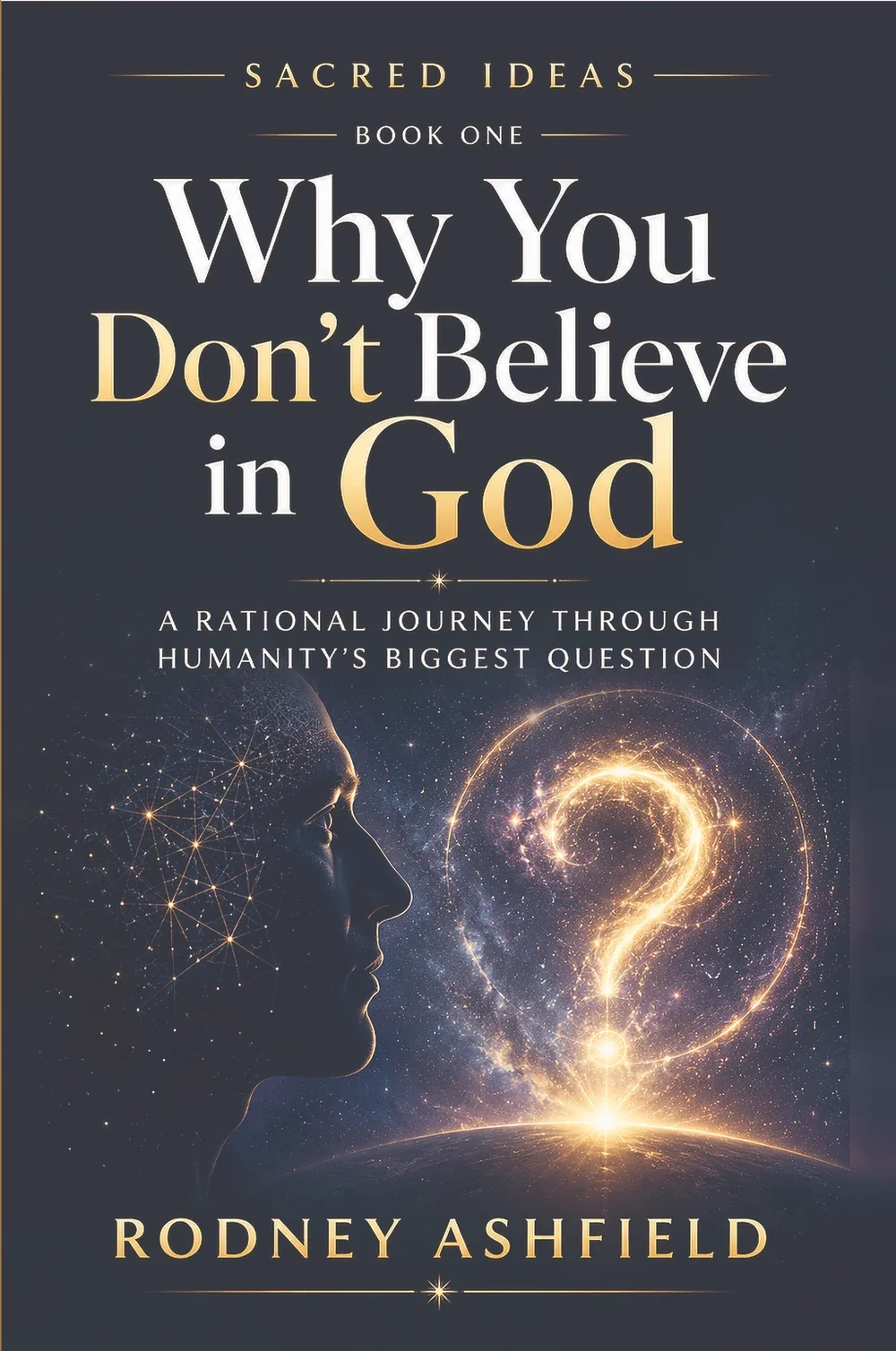
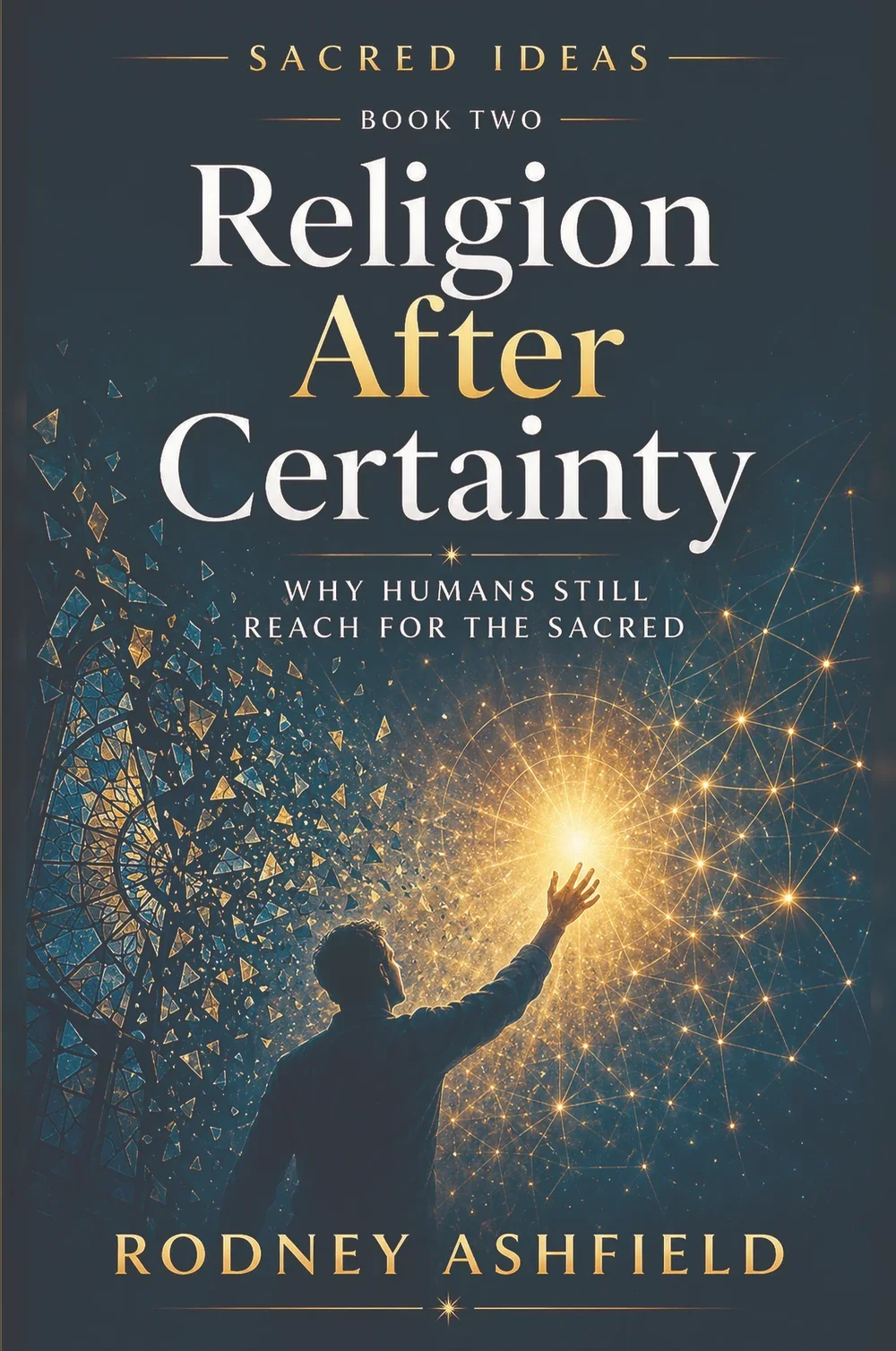
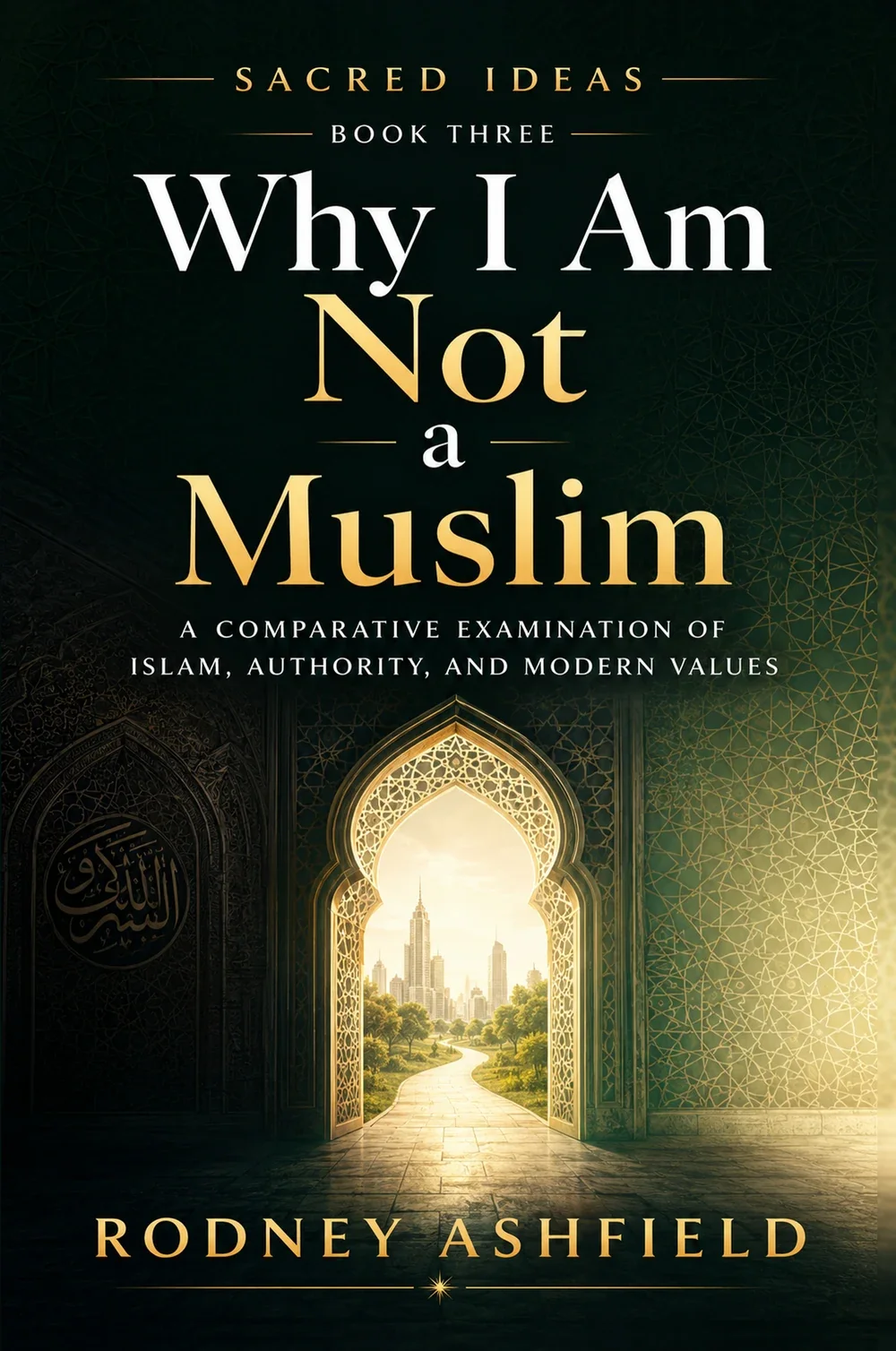
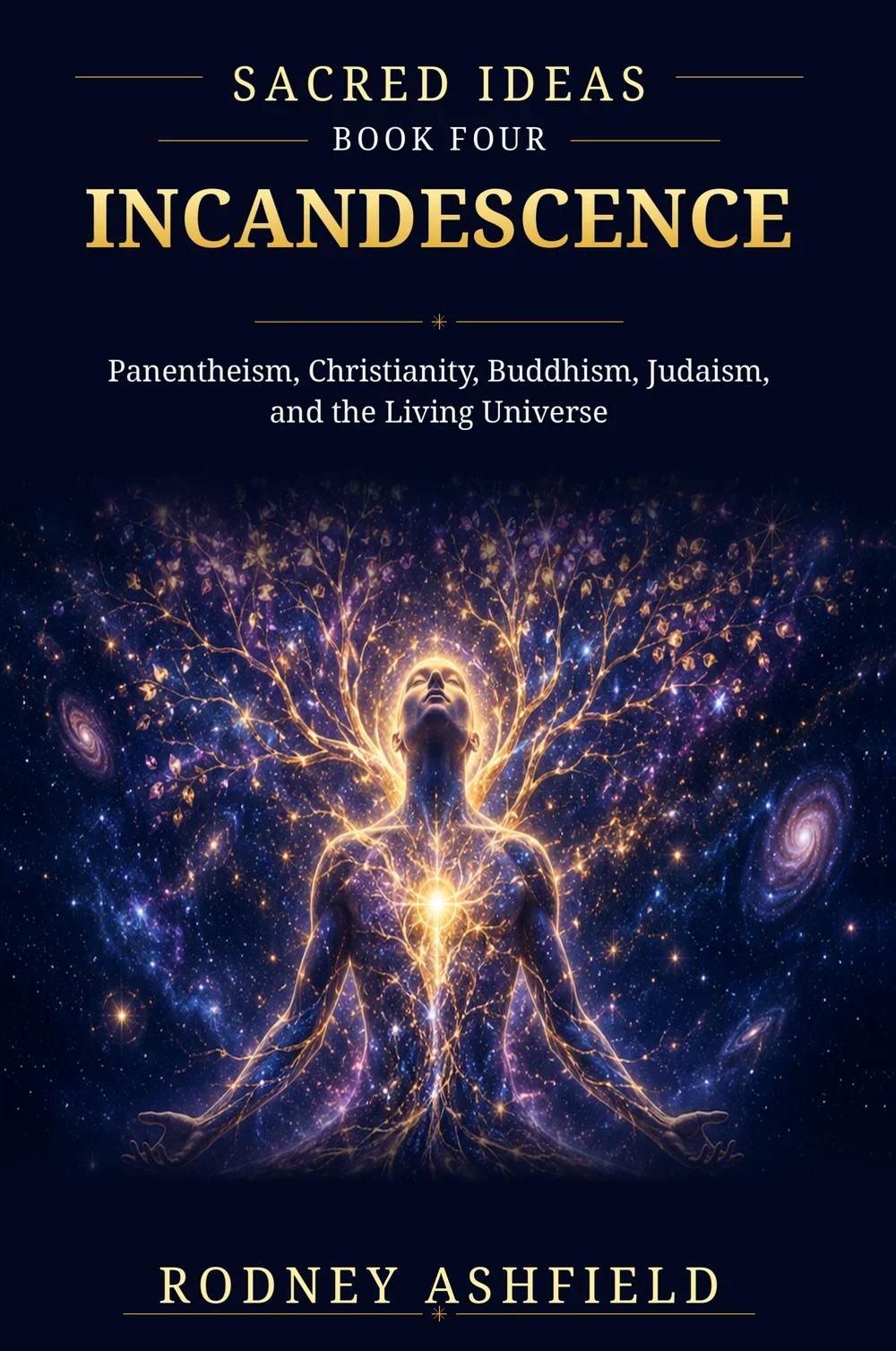
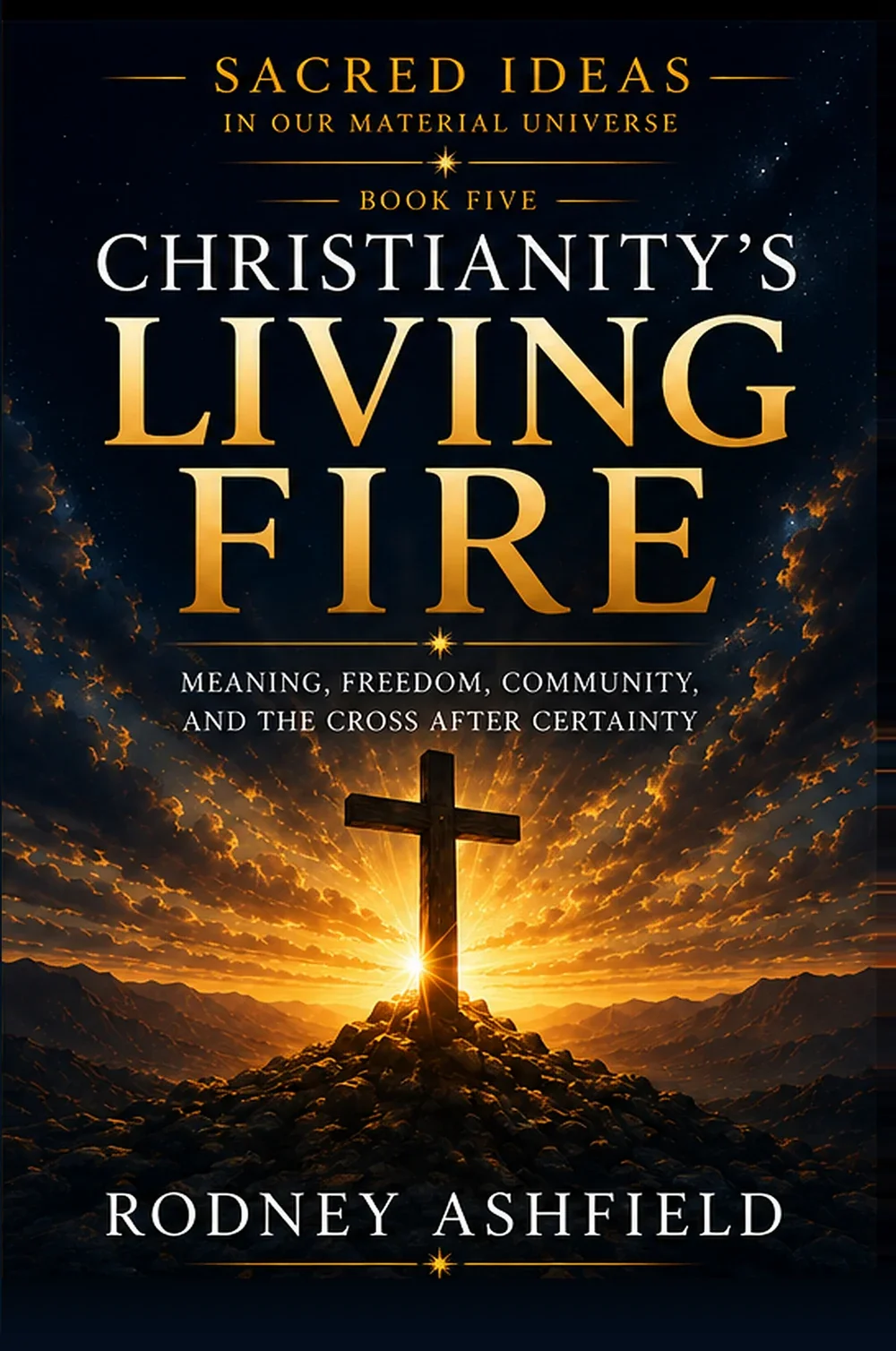
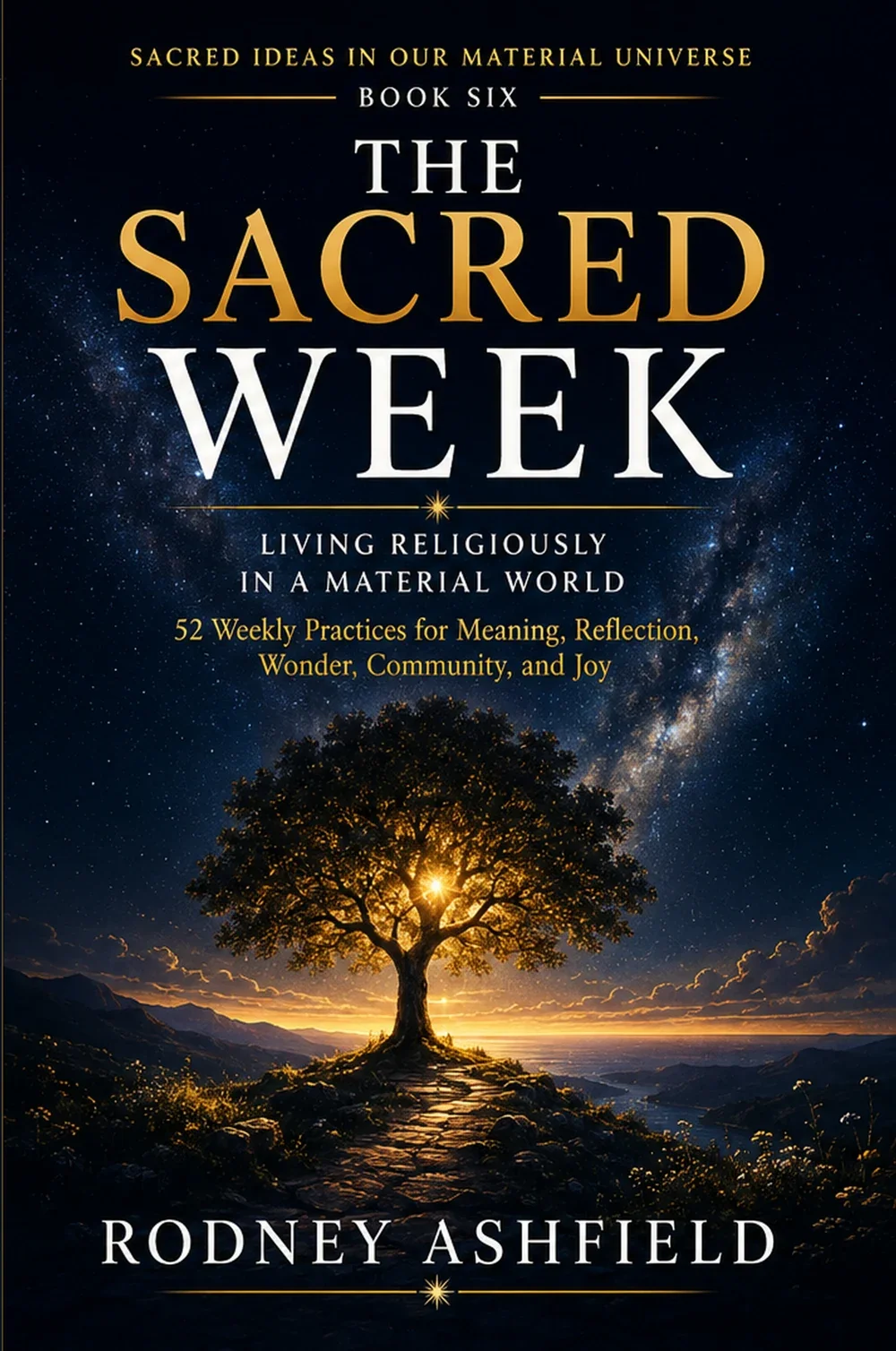
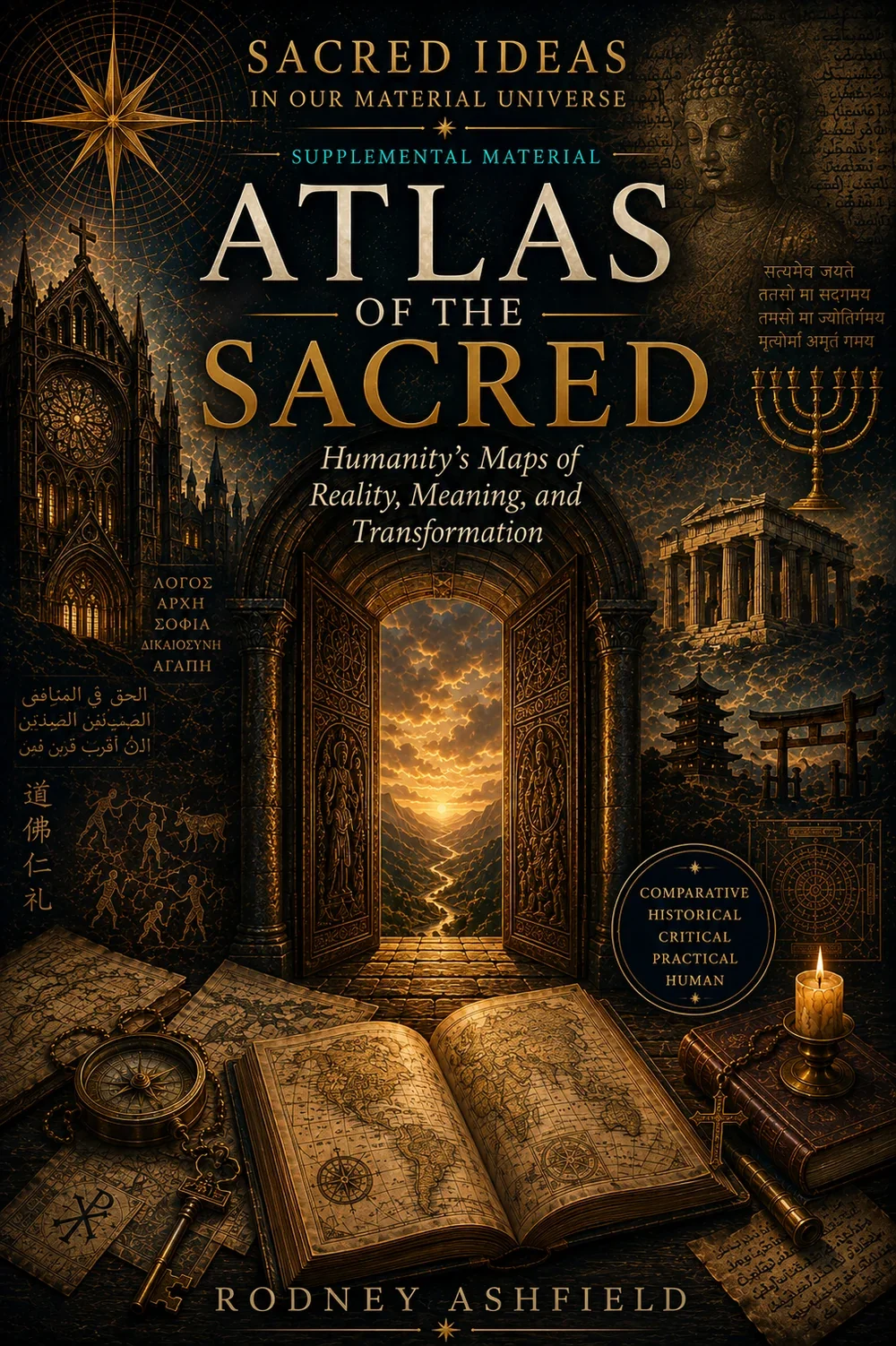
Sacred Ideas in Our Material Universe
A larger project about religion after certainty.
Sacred Ideas examines the rise of religion and religiosity, the needs they answered, the harms they sometimes produced, and what forms of sacred life might still be worth creating.
The premise is neither religious nostalgia nor secular triumphalism. It is curiosity: what did religion carry that human beings may still need?
Incandescence
Somewhere in the history of matter, the universe became inward.
A stone exists. A tree lives. An animal experiences. A human being can experience—and know that experience matters.
Incandescence is Rodney Ashfield’s developing language for that extraordinary condition: nature illuminated from within by conscious life. Not another supernatural theory, but an attempt to take the natural world seriously enough to remain astonished by what has arisen within it.
The seventh title · companion work
Humanity has never lived by one map.
Atlas of the Sacred: Humanity’s Maps of Reality, Meaning, and Transformation places major religious, philosophical and cultural frameworks beside one another.
The six books make an argument. The Atlas gives the reader a wider map.
The person behind the work
Formal study. Applied work. Four decades of inquiry.
Much of Rodney’s working life unfolded outside universities but among people: children, adolescents, people living with disability and acquired brain injury, workers rebuilding their lives, seniors, patients, families, colleagues and customers.
He later founded Ashfield Orthotics, a Saskatchewan foot-health clinic. Through all of it, questions about religion, consciousness, God, nature, meaning and human transformation remained a persistent intellectual thread.
The public work is relatively new. The inquiry behind it is not.
About Rodney Ashfield →Ideas in conversation
A good talk should continue after the speaker stops talking.
Speaking
Keynotes, lectures, university appearances, panels, moderated conversations, virtual and international engagements.
Explore speaking topics →Podcasts & media
Religion after certainty and Incandescence; AI research, consciousness, human judgement and the societal consequences of increasingly capable systems.
Media information →Inquiries
Speaking invitations, interviews, publishing conversations and serious collaborations across Sacred Ideas and AI & Society are welcome.
Contact Rodney →A window · a door · a shelf · a way in
Perhaps the important question is whether we are still capable of making better maps—without forgetting the living world beneath our feet.
RodneyAshfield.com is the personal entrance. The books are one route. The Atlas is another. The larger intellectual world continues at SacredIdeas.org.